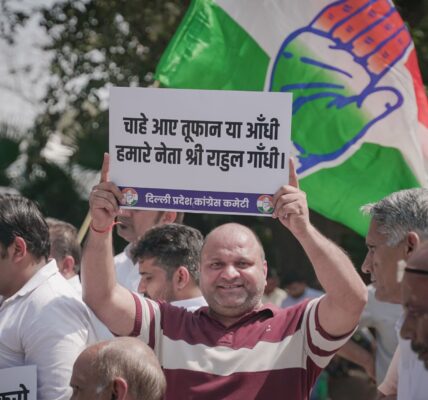

Rajnath Singh remarks draw attention to the ongoing political discourse in India. His comments come in response to Rahul Gandhi’s ‘regime change’ remark, raising concerns about the implications for democracy.
Understanding Rajnath Singh’s Remarks
Recently, Rajnath Singh’s remarks have stirred significant discussion in political circles. During a press conference, he addressed Rahul Gandhi’s controversial statement regarding “regime change,” characterizing it as a potential catalyst for anarchy in the country. Singh emphasized that such claims could undermine the democratic fabric of India.
In his speech, he pointed out that the idea of regime change through non-democratic means is alarming and could lead to chaos. He elaborated on the potential ramifications of this perspective, stating that it not only threatens stability but also erodes public trust in the electoral process.
Singh further articulated his concerns by referencing “vote-chori”, a term used to describe electoral malpractice. He argued that allegations of vote theft can incite unrest and should be approached with caution. To contextualize his remarks, he outlined several key points:
- The importance of upholding democratic values.
- The risks associated with inflammatory rhetoric.
- The need for unity and respectful political discourse.
Rajnath Singh’s remarks serve as a reminder of the delicate balance required in political discussions to foster a healthy democracy.
Context Behind Rahul Gandhi’s Statement
In the recent political discourse, Rajnath Singh’s remarks have stirred significant attention, particularly in relation to Rahul Gandhi’s comments regarding a potential ‘regime change.’ Singh emphasized that such statements could lead to what he termed ‘anarchy’ within the political landscape. This exchange highlights the ongoing tensions between the ruling party and the opposition.
Rahul Gandhi, during a public address, suggested that the current government’s practices could be undermining democratic norms. He used the term ‘vote-chori’ to imply that the integrity of elections was at stake. In response, Rajnath Singh condemned these assertions, arguing that they misrepresent the government’s intentions and could incite unrest among the populace. Singh’s assertion points to a broader concern about the implications of political rhetoric in a pluralistic society.
As both leaders continue to engage in this verbal tug-of-war, the context behind Rajnath Singh’s remarks serves as a reminder of the fragile balance of power and the responsibilities that come with political discourse. Observers are keenly watching how these exchanges may impact the upcoming elections and the political climate overall.
Political Implications of Anarchy Claims
The recent remarks by Rajnath Singh regarding claims of anarchy have sparked significant political discourse. Singh’s comments arise in the context of Rahul Gandhi’s controversial statement about “regime change.” This situation has illuminated the complexities surrounding political accountability and governance in India.
As political leaders engage in a war of words, the implications of Singh’s remarks could ripple through various levels of the political landscape. The concept of anarchy, as presented, raises questions about the stability of the current government and its ability to maintain order amidst rising tensions.
Key implications include:
- Public Sentiment: Voter perceptions may shift based on how these remarks are interpreted.
- Opposition Strategies: The opposition might leverage Singh’s comments to bolster their narrative against the ruling party.
- Government Response: The ruling party may feel compelled to clarify its position on anarchy claims to assuage public concerns.
Ultimately, Rajnath Singh’s remarks on anarchy not only reflect the current political climate but also set the stage for potential shifts in voter behavior ahead of upcoming elections.
Public Reaction to Singh’s Comments
Public reaction to Rajnath Singh’s remarks has been significant, with many citizens and political analysts weighing in on the implications of his statements regarding anarchy. The remarks have sparked heated discussions across various platforms, highlighting the divide in public opinion.
- Supporters of Singh argue that his comments accurately reflect the current political climate, asserting that there is a growing sentiment of instability and unrest in the country. They believe that acknowledging such issues is vital for maintaining democracy.
- On the other hand, critics contend that Singh’s use of the term ‘anarchy’ is exaggerated and intended to distract from pressing issues faced by the government. They argue that labeling dissent as anarchy undermines legitimate concerns raised by opposition leaders like Rahul Gandhi.
- Furthermore, social media platforms have become a battleground for opinions, with users expressing both support and condemnation of Singh’s remarks, often sharing memes and videos that reflect their views.
Ultimately, the public’s response to Rajnath Singh’s remarks reflects a broader discourse on political accountability and the state of democracy in the nation.
Analysis of Vote-Chori Allegations
The recent remarks made by Rajnath Singh have ignited a fierce debate regarding the allegations of vote-chori, particularly in the context of accusations directed at the ruling party. The term ‘vote-chori’ suggests a manipulation of the electoral process, a claim Singh vehemently denies, stating that such assertions are merely attempts to create confusion and undermine democratic integrity.
In analyzing the implications of these allegations, several points emerge:
- Historical Context: Allegations of electoral fraud are not new in Indian politics, often surfacing during contentious election cycles.
- Political Strategy: Critics argue that these claims serve as a distraction from pressing issues facing the electorate, particularly in opposition narratives.
- Public Perception: Singh’s remarks may influence voter sentiment, potentially either rallying support for the ruling party or intensifying opposition claims of mismanagement.
- Legal Ramifications: The ongoing discussions around these allegations could lead to further scrutiny and legal challenges, impacting future elections.
In summary, Rajnath Singh’s remarks on the vote-chori allegations reveal deep-seated tensions within the political landscape, where accusations of anarchy are met with counterclaims of political opportunism.
Comparing Political Strategies
In the ongoing political discourse, the Rajnath Singh remarks have sparked a comparison of strategies among various political leaders. Singh’s comments on anarchy have drawn attention to how different parties articulate their positions during times of crisis.
One key area of comparison is the contrasting approaches taken by the ruling party and the opposition. While the ruling party emphasizes stability and governance, the opposition often frames their narratives around change and reform. This divergence highlights the tactical decisions made to resonate with voters.
Moreover, political analysts note that the language used in these discussions can significantly impact public perception. Singh’s use of the term “anarchy” aims to evoke a sense of urgency and concern, suggesting that any calls for regime change could lead to chaos. In contrast, opposition leaders like Rahul Gandhi leverage such remarks to question the government’s effectiveness.
As the political landscape continues to evolve, the effectiveness of these strategies will be closely monitored, with voters increasingly aware of the implications behind each leader’s rhetoric.
Future of Indian Democracy
The future of Indian democracy hangs in the balance as political discourse continues to be influenced by recent remarks made by Rajnath Singh. His comments on anarchy have sparked significant debate among political analysts and citizens alike. Many are questioning whether such claims could undermine the foundational principles of democratic governance.
In the wake of Singh’s statements, there are growing concerns regarding the implications for political stability. Some experts argue that constant allegations of anarchy may polarize the electorate further, potentially leading to a fragmented political landscape. As the nation heads toward the next election cycle, the focus will likely shift to how parties address these concerns.
Furthermore, the discourse surrounding Rajnath Singh’s remarks highlights the need for responsible dialogue in politics. With rising tensions, it is essential for leaders to prioritize unity and collaboration over divisive rhetoric. The long-term impact of Singh’s remarks could either strengthen democratic institutions or contribute to a culture of mistrust among the populace.
As citizens navigate these turbulent times, the role of informed debate becomes increasingly crucial for safeguarding the future of Indian democracy.
The Rajnath Singh remarks have sparked widespread debate among political analysts regarding their implications for national security. Many are questioning the validity of the worst anarchy claims in light of these comments.
Photo by Nishant Aneja on Pexels
Read the original
Related reading
Tata Technologies Q2 results: Best proven insights for investors? · Women in Top Roles: What’s the Real Impact of Trump’s Policies? · Indian beauty entrepreneurship: Best proven winners of 2026