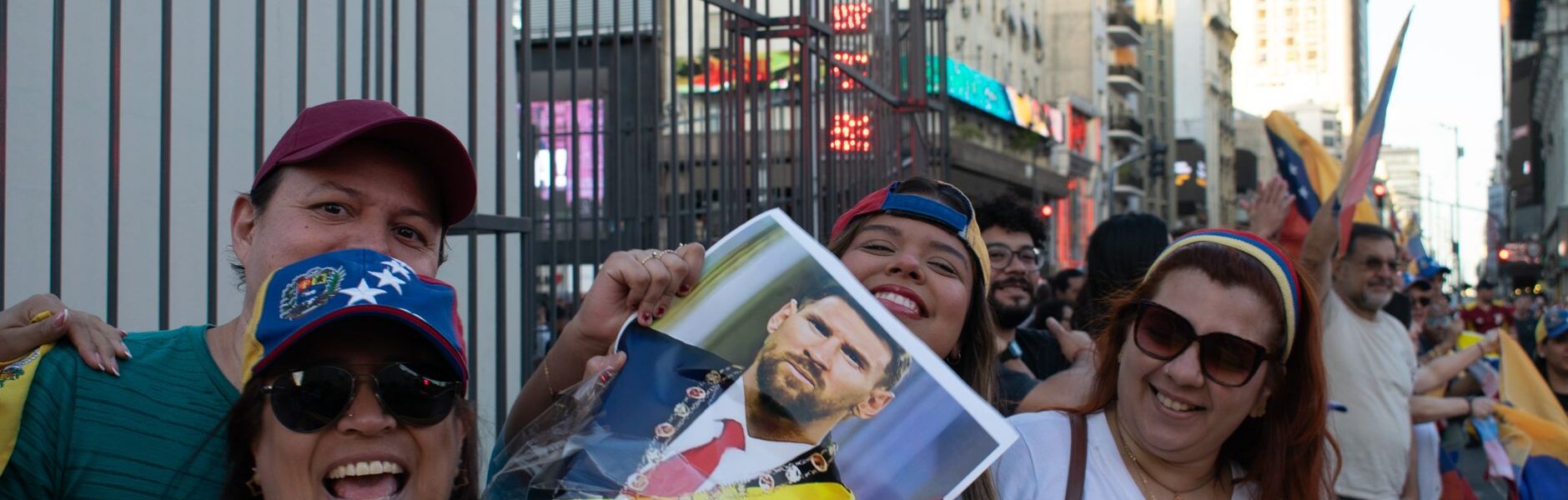

Venezuela’s Maduro ally has pleaded guilty in a US corruption case, highlighting the ongoing issues of corruption and accountability within the Venezuelan government.
Background on Alex Saab
Alex Saab, a prominent ally of Venezuela’s Maduro, has been at the center of a major corruption scandal that has drawn international attention. Born in Colombia, Saab initially gained recognition as a businessman who facilitated various deals in Latin America. However, his close ties to the Venezuelan government, particularly to President Nicolás Maduro, have marked his career with controversy.
In 2020, Saab was arrested in Cape Verde at the request of U.S. authorities, who accused him of being involved in a money laundering scheme that allegedly siphoned billions from Venezuelan state funds. The U.S. government has characterized Saab’s operations as crucial to Maduro’s regime, claiming he helped evade sanctions imposed on Venezuela due to its ongoing humanitarian crisis.
Recently, Saab pleaded guilty in a U.S. court to charges related to these corruption schemes. This plea has raised eyebrows and concerns about the extent of corruption within the Venezuelan government and its impact on the country’s economy.
- Key Charges: Money laundering
- Allegations: Bilking state funds
- Impact: Deepening economic crisis in Venezuela
Details of the Corruption Case
In a significant development, Alex Saab, a close ally of Venezuela’s Maduro, has pleaded guilty to multiple charges related to corruption. The case revolves around accusations that Saab was involved in a complex scheme to embezzle millions of dollars from the Venezuelan government.
The details of the corruption case highlight several key points:
- Money Laundering: Saab allegedly funneled funds through a network of shell companies, obscuring the true origin of the money.
- Government Contracts: He is accused of securing contracts for food and other essential goods, which were ultimately sold at inflated prices, depriving citizens of vital resources.
- International Implications: The case has drawn attention from various governments and organizations, raising concerns about corruption in Venezuela and its impact on international relations.
- Potential Sentencing: Saab’s plea agreement suggests he may cooperate with authorities, potentially implicating others in the Maduro regime.
This case marks a critical moment in the ongoing fight against corruption in Venezuela and highlights the challenges faced by the Maduro administration.
Implications for Venezuela’s Government
The corruption charges against Alex Saab, a key ally of Venezuela’s Maduro, have far-reaching implications for the nation’s government. Saab’s guilty plea in a U.S. federal court highlights the extent of corruption within the Maduro administration, raising questions about the integrity of its leaders.
As details of the case unfold, several potential consequences may arise:
- International Relations: The guilty plea may worsen Venezuela’s already strained relations with the United States and other nations, potentially leading to harsher sanctions and diplomatic isolation.
- Domestic Stability: Heightened scrutiny on Maduro’s government could incite public protests and dissent, as citizens grapple with the implications of corruption on their daily lives and the economy.
- Political Repercussions: Saab’s case may embolden opposition groups, providing them with a rallying point to challenge the Maduro regime and demand accountability.
Ultimately, the outcome of this case could serve as a turning point for Venezuela, influencing both its political landscape and economic future.
Reactions from the International Community
Reactions from the international community have been swift and varied following the recent guilty plea by Alex Saab, a close ally of Venezuela’s Maduro, in a U.S. corruption case. Many nations have expressed concern over the implications this case holds for Venezuela’s already strained relations with the West.
Several human rights organizations have called for increased scrutiny of the Venezuelan government, emphasizing the need for accountability amidst widespread allegations of corruption. Amnesty International stated that Saab’s plea exposes the “systemic corruption” within the Maduro regime, urging global actors to take a stand against such practices.
On the other hand, some countries have rallied behind Venezuela, condemning U.S. actions as politically motivated. Russia and China, both allies of Venezuela’s Maduro, have criticized the legal proceedings as an infringement on sovereignty, arguing that the U.S. is attempting to destabilize the Venezuelan government.
Overall, the case against Saab has reignited debates on international intervention and the role of foreign powers in Venezuela’s internal affairs, with various stakeholders weighing in on the potential fallout.
Venezuela’s Maduro ally has been implicated in a series of financial scandals that have raised eyebrows both domestically and internationally. As investigations unfold, Venezuela’s Maduro ally faces mounting pressure from the public and opposition groups demanding accountability.
Photo by Renan Braz on Pexels
References